
Maths
Meet our Maths Lead
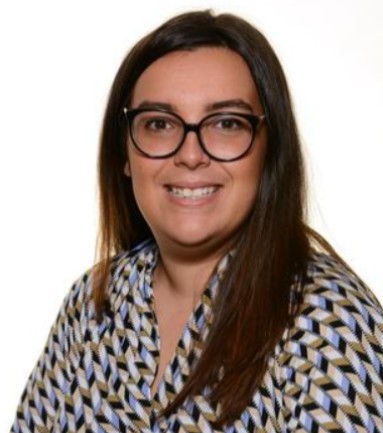
Hi, I'm Mrs Purcell, the Maths Lead here at Joseph Turner!
I’ve been part of the Joseph Turner family for 12 years, and in that time my love for maths has only grown (yes, I’m that person who genuinely gets excited about numbers!).
I’ve always loved our hands‑on, investigative approach. Maths might have right and wrong answers, but the journey to get there can take you down all sorts of exciting paths. I can spend hours exploring ideas, spotting patterns and proving whether something works—or doesn’t!
I especially enjoy anything with a real‑life twist… and if it involves sweet treats, even better. Maths is everywhere around us, often without us realising, and that’s what makes it so amazing.
I also work with the Central Maths Hub to make sure everything we do is up‑to‑date, creative and gives every child the chance to master key skills. I’m always sharing new ideas with our teachers to help make tricky concepts clearer (and more fun!) for our pupils.

Our Maths Vision
What is taught and how?
At Joseph Turner Primary, our vision is to ensure that all pupils develop a deep, secure, and sustainable understanding of mathematical concepts. We achieve this by breaking down each National Curriculum objective into carefully sequenced small steps, enabling pupils to build fluency and confidence before progressing to more complex ideas.
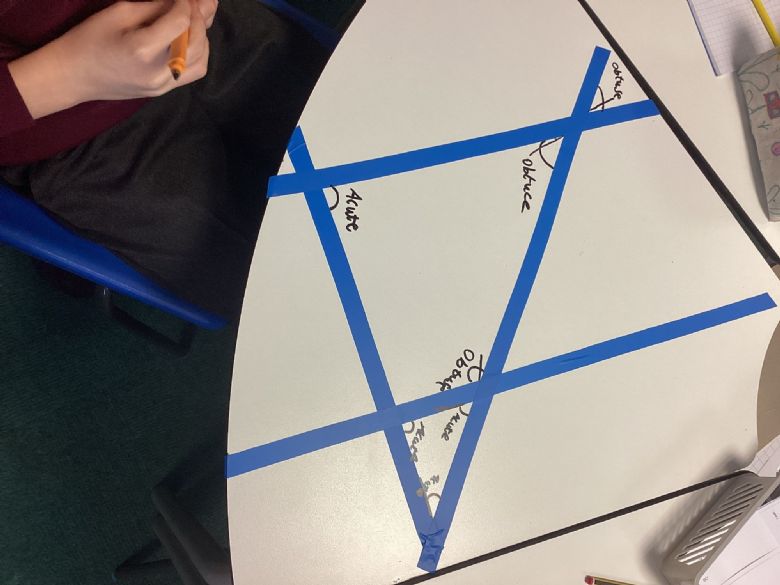
Our curriculum structure is deliberately designed to promote breadth and consistency. Each week, pupils receive four dedicated number lessons and one lesson focused on shape, space and measure. This ensures that these strands are revisited regularly and embedded progressively throughout each child’s mathematical journey, rather than being taught in isolated blocks.
A strong emphasis is placed on developing firm foundations in number. When pupils encounter challenge, they are encouraged to draw on prior learning, make connections, and strengthen conceptual understanding by revisiting and linking knowledge. This reflective approach supports long‑term retention and mathematical independence.
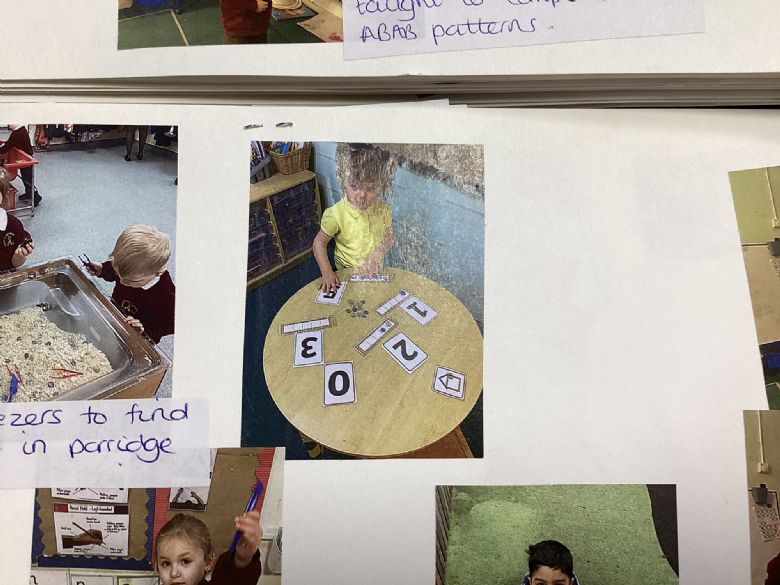
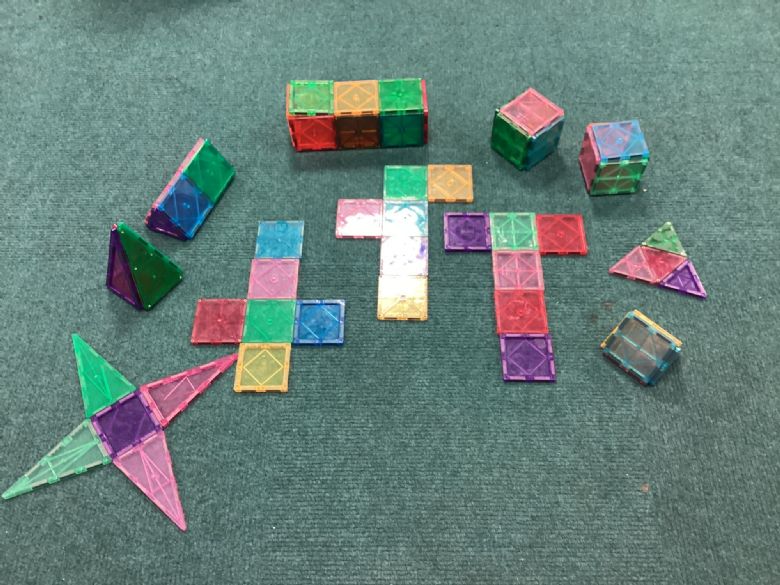
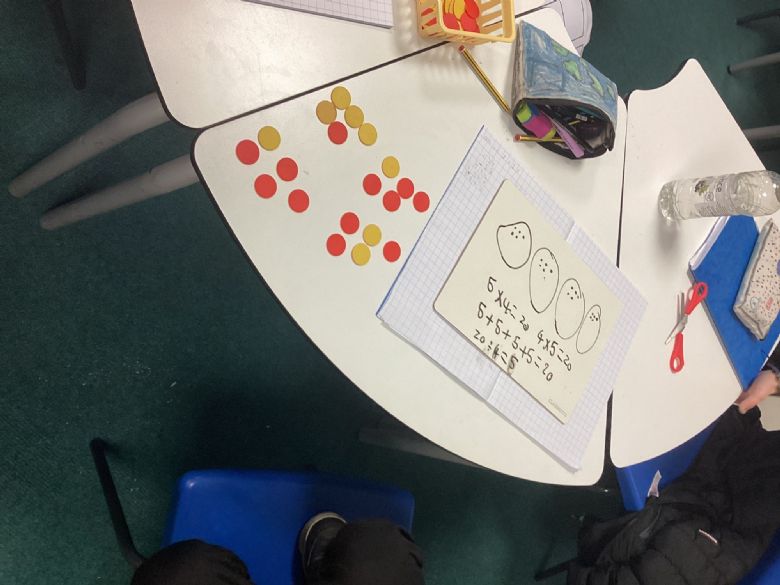
Our teaching is underpinned by the CPA (Concrete – Pictorial – Abstract) approach, ensuring that all pupils have equitable access to high‑quality representations. Concrete manipulatives are used purposefully to expose mathematical structures; alongside this, pictorial representations support visual understanding before pupils move on to abstract calculations. This progression enables pupils to internalise concepts, reason effectively, and apply skills flexibly.
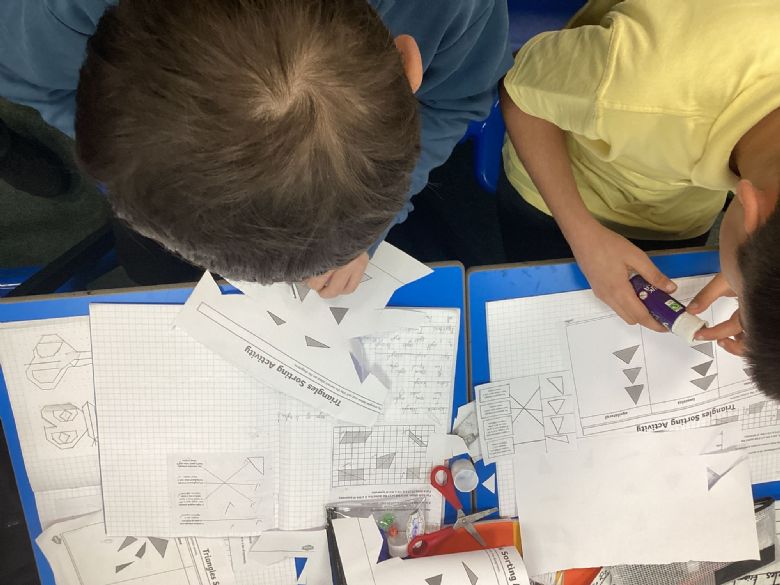
Collaborative learning is a core feature of our classroom practice. Pupils are expected to articulate their thinking, engage in structured partner talk, and participate actively during anchor tasks. This promotes mathematical language development, reasoning, and shared understanding. Visitors to our maths lessons will see a culture of “my turn, our turn, your turn,” supporting modelling, guided practice, and independent application.
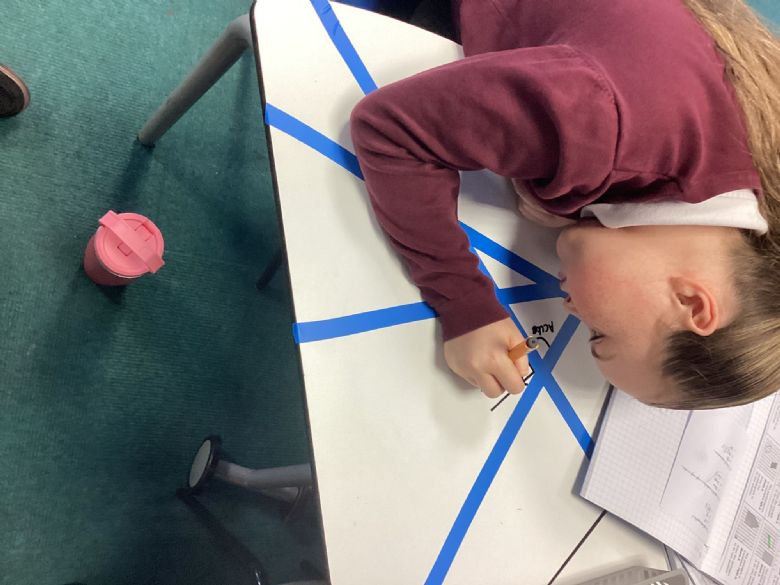
Manipulatives play a significant role in deepening understanding rather than solely generating answers. They support all learners, including those with SEND, by clarifying mathematical structure and enabling exploratory learning. Investigative tasks are embedded throughout the curriculum, providing opportunities for pupils to explore patterns, test hypotheses, and apply their understanding to a range of problem‑solving contexts.
Through this approach, we aim for all pupils to become confident, resilient mathematicians who can think critically, make connections, and apply their knowledge with independence and accuracy.
What have we learnt?
What we have to say about Maths
"I love doing the equations because mathematics has always been fun for me" Stanley, Jaguars
"I’m proud of doing things with the dienes." Oscar, Penguins
"I love maths because it’s is easy sometimes it is hard but i enjoy it" Fatima, Panthers
"I am proud about maths because I get lots right in maths and I love shape ,space and measure lesson and regular maths" Nate, Jaguars