Music
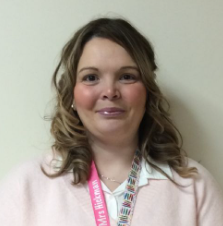
Mrs Hickman – Music Curriculum Leader
Hello! I’m Mrs Hickman, the Music Curriculum Leader here at Joseph Turner Primary School. This is my 3rd year teaching at Joseph Turner, and I am currently a Year 3 teacher. Music has been a huge part of my life for as long as I can remember. From learning the recorder and clarinet in primary school to joining the school choir and performing in assemblies, Christmas productions, and even at the Town Hall in West Bromwich, music has always been where I feel most at home.
My passion for music has only grown over the years. I’m a big Katy Perry fan and was lucky enough to see her live in concert! I also love going to live concerts as often as I can—there’s nothing quite like the excitement and atmosphere of live music.
I truly believe in the power of music: how it can instantly uplift us, change our mood, and bring people together. Whether in class or around school, we’re always finding moments for a good sing and dance to brighten our day.
I’m really excited to Lead Music Lead and develop a curriculum that inspires our pupils to be as enthusiastic about music as I am. I can’t wait to help embed musical experiences throughout the school and create joyful, memorable opportunities for all children to shine.
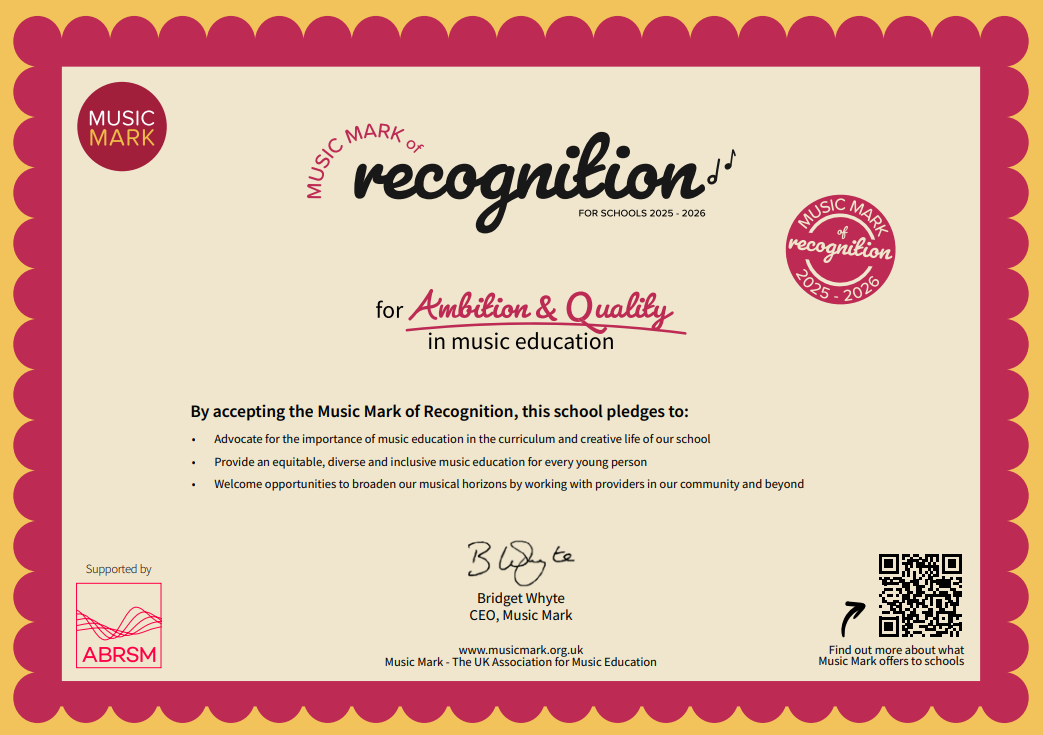
I am also very proud to announce that we were recently awarded a music mark of recognition recognising our positive commitment to music across the school and our ongoing engagement with SIPS Music.
Intent
At Joseph Turner Primary School, our music curriculum introduces children to music from all around the world and across generations, teaching children to respect and appreciate the music of all traditions and communities.
Children will develop the musical skills of singing, playing tuned and untuned instruments, improvising and composing music, and listening and responding to music through a well-balanced curriculum. They will develop an understanding of the history and cultural context of the music that they listen to and learn how music can be written down. Through music, our curriculum helps children develop transferable skills such as team-working, leadership, creative thinking, problem-solving, decision-making and presentation and performance skills. These skills are vital to children’s development as learners and have a wider application in their general lives outside and beyond school.
Our curriculum has been designed to provide opportunities for pupils to meet the end of key stage attainment targets outlined in the national curriculum and the aims of the scheme align with those in the national curriculum.
What and how music is taught.
Our curriculum at Joseph Turner has been influenced and supported by the KAPOW scheme of music. Our teachers use the scheme to assist providing a holistic approach to music, in which the individual strands below are woven together to create engaging and enriching learning experiences:
- Performing
- Listening
- Composing
- The history of music
- The inter-related dimensions of music.
Each five-lesson unit combines these strands within a cross-curricular topic designed to capture pupils’ imagination and encourage them to explore music enthusiastically. Over the course of the scheme, children will be taught how to sing fluently and expressively, and play tuned and untuned instruments accurately and with control. They will learn to recognise and name the interrelated dimensions of music – pitch, duration, tempo, timbre, structure, texture and dynamics – and use these expressively in their own improvisations and compositions.
The instrumental scheme lessons conducted by SIPs complement our scheme of work and allow pupils in years 2, 3 and 4 to develop their expertise in using a tuned instrument for a minimum of one term as recommended in the ‘Model Music Curriculum’.
Joseph Turner’s music curriculum follows the spiral curriculum model where previous skills and knowledge are returned to and built upon, children progress in terms of tackling more complex tasks and doing more simple tasks better, as well as developing understanding and knowledge of the history of music, staff and other musical notations, as well as the interrelated dimensions of music and more.
In each lesson, pupils will actively participate in musical activities drawn from a range of styles and traditions, developing their musical skills and their understanding of how music works. Lesson incorporate a range of teaching strategies from independent tasks, paired and group work as well as improvisation and teacher-led performances. Lessons are ‘hands-on’ and incorporate movement and dance elements, as well as making cross curricular links with other areas of learning.
Differentiated guidance is available to every lesson to ensure that lessons can be accessed by all pupils and opportunities to stretch pupils’ learning are available when required. Knowledge organisers for each unit support pupils in building a foundation of factual knowledge by encouraging recall of key facts and vocabulary.
Strong subject knowledge is vital for staff to be able to deliver a highly effective and robust music curriculum. Each unit of lessons includes multiple teacher videos to develop subject knowledge and support ongoing CPD, aiding teachers in their own acquisition of musical skills and knowledge.
Impact
The impact of our music curriculum be constantly monitored through a range of assessment opportunities. Each lesson is provided with guidance to support teachers in assessing pupils against the learning objectives and at the end of each unit there is often a performance element where teachers can make a summative assessment of pupils’ learning. Knowledge organisers for each unit support pupils by providing a highly visual record of the key learning from the unit, encouraging recall of practical skills, key knowledge and vocabulary.
Pupils should leave primary school equipped with a range of skills to enable them to succeed in their secondary education and to be able to enjoy and appreciate music throughout their lives.
The expected impact of following impact of our music curriculum is that children will:
- Be confident performers, composers and listeners and will be able to express themselves musically at and beyond school.
- Show an appreciation and respect for a wide range of musical styles from around the world and will understand how music s influence by the wider, cultural, social and historical contexts in which it is developed.
- Understand the ways in which music can be written down to support performing and composing activities.
- Demonstrate and articulate an enthusiasm for music and be able to identify their own personal musical preferences.
- Meet the end of key stage expectations outlined in the national curriculum for Music.